

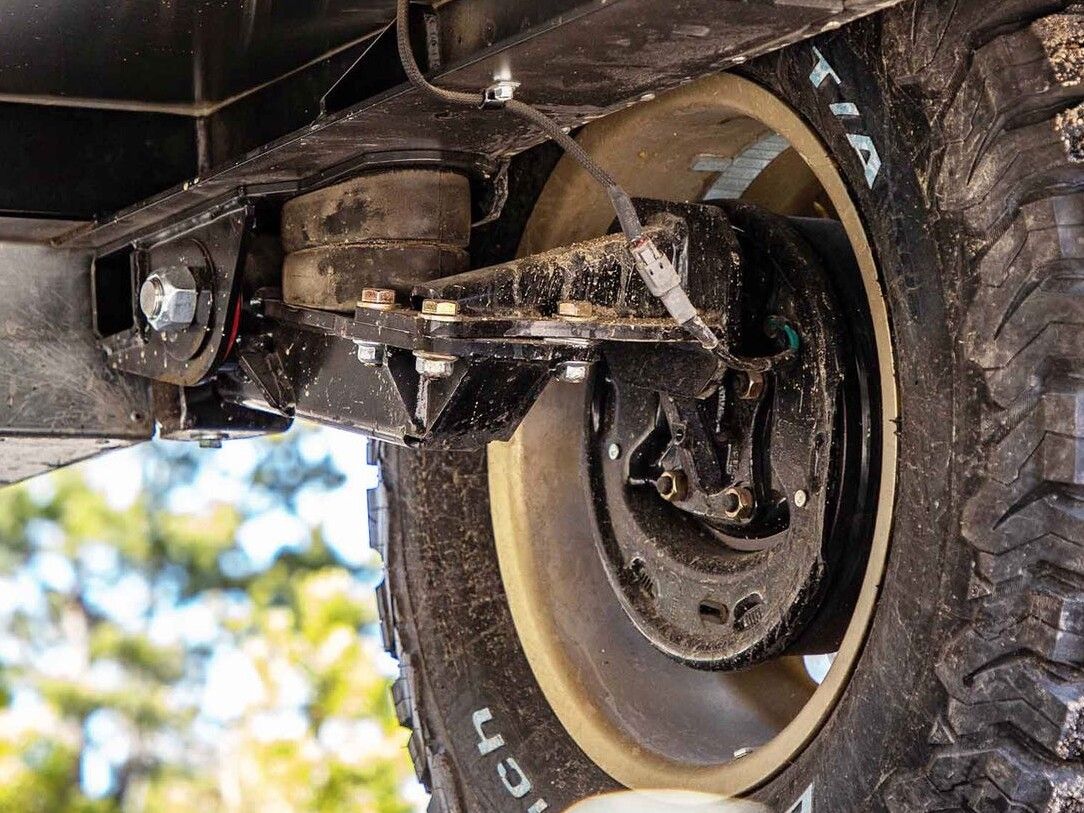


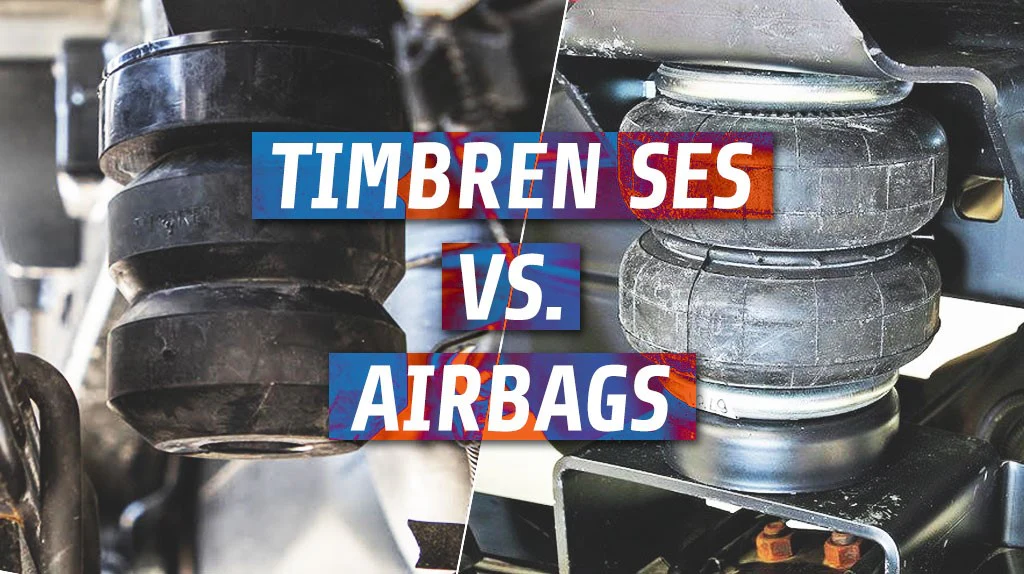
Timbren Suspension vs Airbags
Introduction
Within the global 4×4 and commercial aftermarket, Ride Solutions has seen it all. We know that in regions across EMEA and Asia, your suspension isn’t just about comfort—it’s about survival and performance in some of the most punishing environments on Earth.
Traditionally, owners have relied on additional leaf springs or air-adjustable bellows to manage heavy loads. While these have their place, the Timbren SES (Suspension Enhancement System) has emerged as the premier rival to complex airbag systems. Whether you are outfitting a Toyota Land Cruiser for a trans-continental expedition or a Ford Ranger for heavy site work, the choice between “Air vs. Rubber” is the most critical decision you will make.
The Overlander’s Dilemma: Complexity vs. Reliability
For over 50 years, global explorers have weighed Timbren SES against traditional airbags. At Ride Solutions, we often guide our customers toward the “fit and forget” reliability of Timbren.
In remote environments—the dunes of the Middle East, the mountain passes of Central Asia, or the jungles of Southeast Asia—mechanical simplicity is king. An air leak, a perished line, or a failed compressor in these regions doesn’t just mean a saggy ride; it means a ruined trip or a stranded vehicle.
The following is a short comparison between Timbren SES and an airbag system. Hopefully, you will be able to make a more educated choice between the two.
Similarities
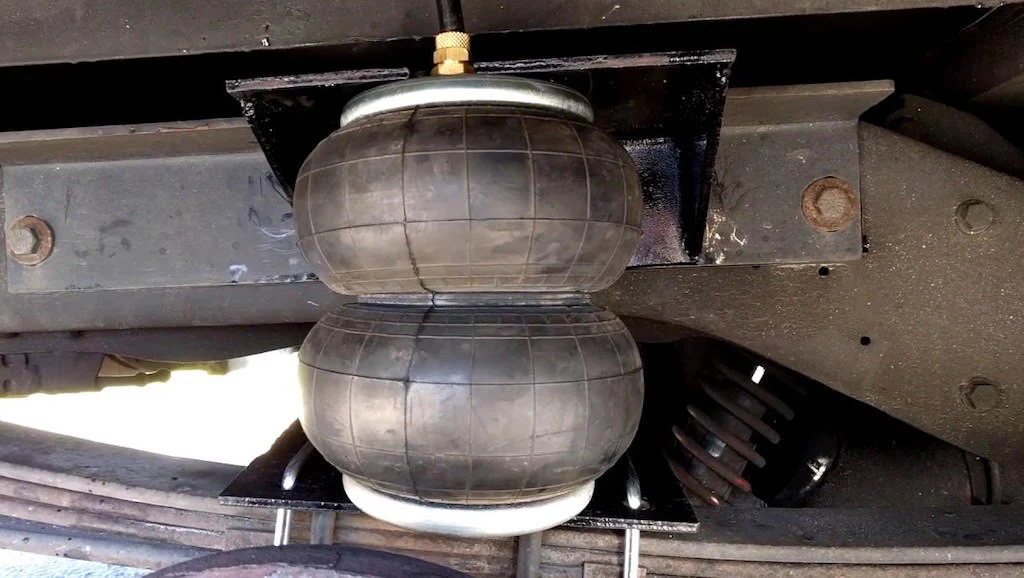
Besides the obvious visual resemblance, what other similarities are there?
Load leveling: Both Timbren SES and the airbag system will improve vehicle handling and its overall performance by reducing suspension sag. Keeping a truck level gives you 3 things:
- Reduced body roll and sway
When a truck is sagging too far to the left of the right, body roll and sway immediately becomes a factor. - Improved steering
If a truck or SUV is sagging in the back end, your steering is compromised. This makes it dangerous to safely navigate rough terrain, curves and bends in the road.
- Better control
It goes without saying that a level vehicle gives you maximum control reducing the need to ‘white knuckle’ it and lower your speed.
Ease of use: Timbren SES upgrades have always been easy to use. You just set it and forget it. Although airbag systems have not always been simple to operate, recent technical advances with airbag suspensions have made it much easier to use.
Ride quality: In general, both airbags and Timbren springs are designed to improve ride quality in both loaded and unloaded situations.
Warranty: Both Timbren SES and airbag systems (Firestone/Air Lift) come with a Limited Lifetime warranty.
Differences
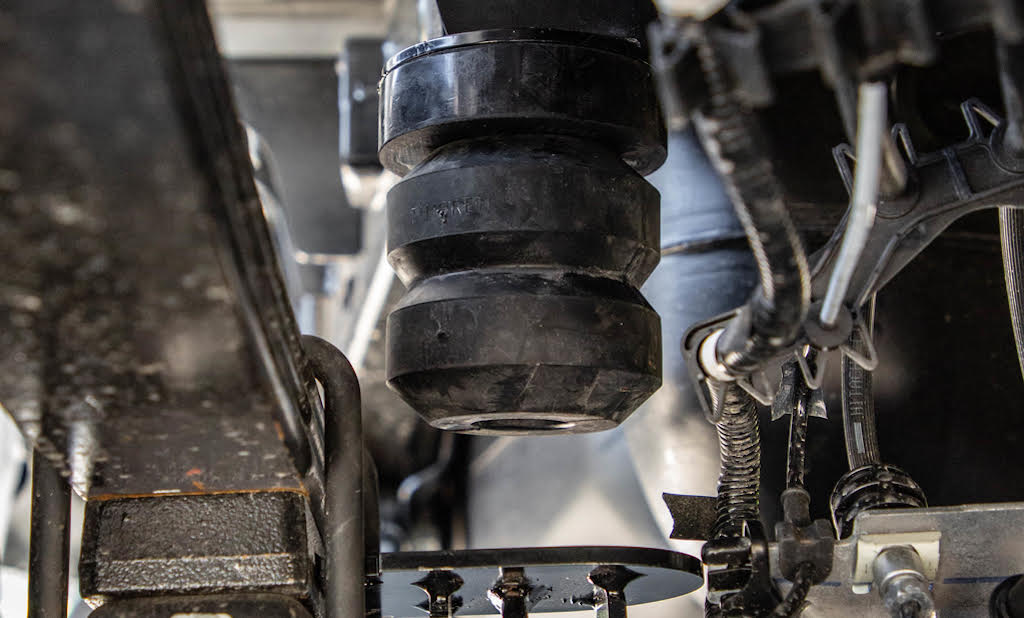
Technology: Fundamentally, a Timbren SES system uses Aeon® hollow rubber springs. They do not use compressed air like airbags. When the load is applied, the shape of the spring begins to expand.
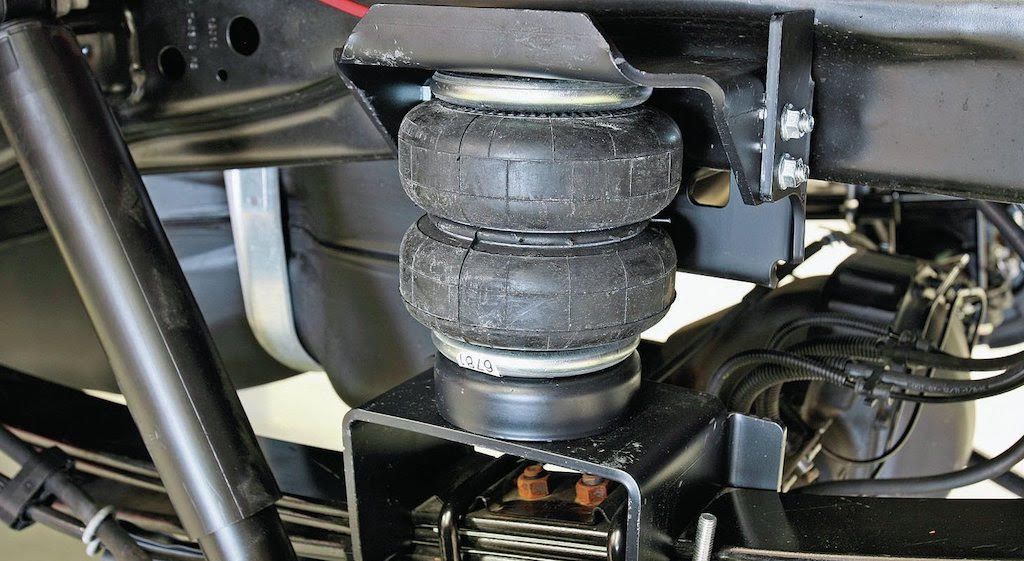
However, airbags are… well, rubber bags designed to hold air. The bag expands just like a balloon as air is forced into the rubber bladder.
Installation: Both systems are relatively easy to install. But if you tried to install an airbag system and then follow up with a Timbren kit, you would be struck by two things:
-
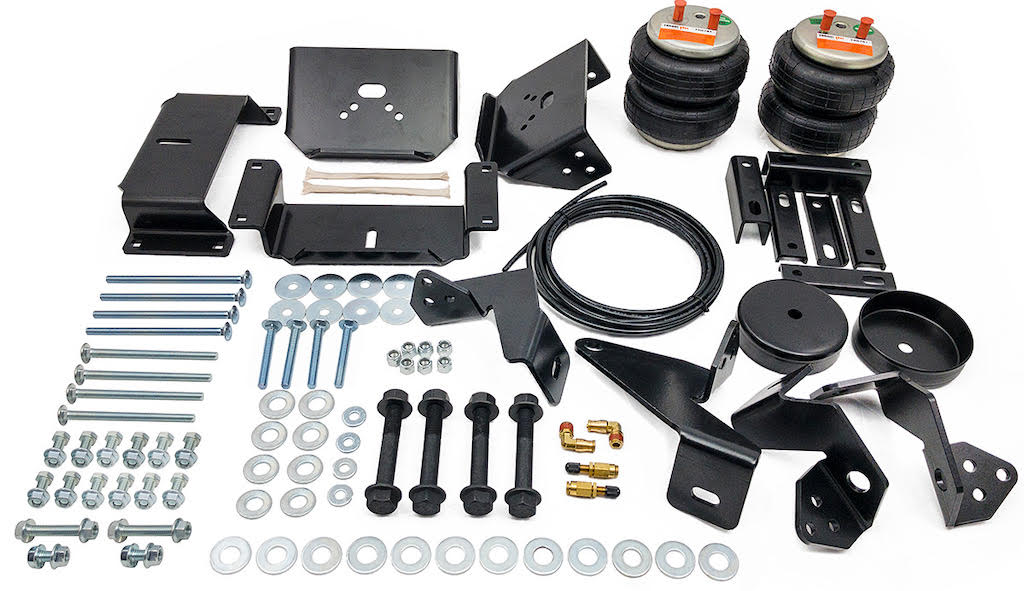
- The airbag kit has a lot more components than the Timbren SES kit does.
- The average airbag kit takes about 3 hours to install; the average Timbren kit takes less than an hour.
Adjustability: The most obvious difference between Timbren SES vs air bags is the manner in which they adapt to various road and load conditions.
Airbags can be manually altered to maintain ride height and, to some degree, driver preference. Needless to say, this makes them quite adjustable.
Timbren rubber springs, on the other hand, automatically adjust to variable loads and road conditions. In other words, these rubber springs are self-adjusting. It’s the progressive spring rate built right into Aeon® hollow rubber springs that enables them to adjust automatically.
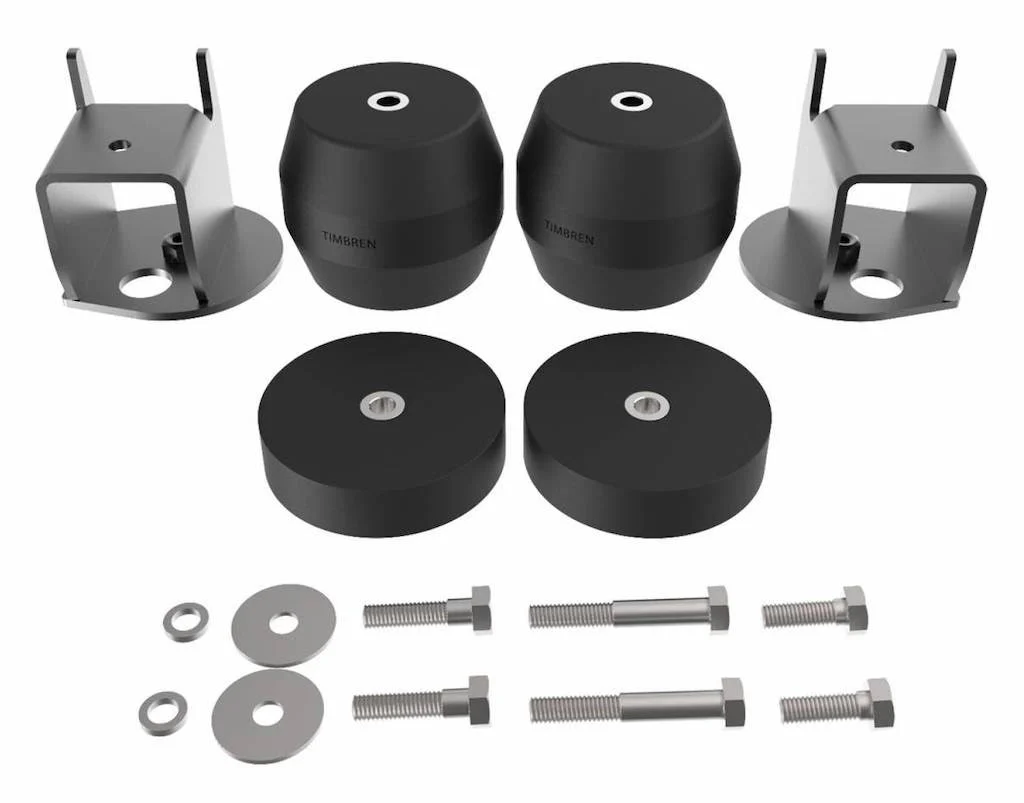
Maintenance: With Timbren SES, the hollow rubber springs require zero maintenance. Any tweaking or adjusting is done during installation.
On the other hand, airbag maintenance must be performed as often as required to ensure the airbag doesn’t dip below 5 psi. (This is to make sure that the airbag isn’t damaged.) Also, because it’s air that’s doing the heavy lifting, the bladder that holds the air may start to leak which would dramatically compromise the effectiveness of the entire system.
Price: Even though we’re comparing price, we are not going to make any judgments regarding cost vs value. (Sometimes a product that costs more is considered to have greater value which, of course, isn’t necessarily true.)
Airbag kits are priced somewhere between $300 and $1000.00. (Don’t forget: there are more things to buy, like on-board air compressors and other related accessories.)
Summary
This short comparison examines the similarities and the differences between Timbren SES suspension upgrades and airbag suspension kits.
Similarities:
- Load leveling
- Ease of use
- Ride Quality
- Warranty
Differences:
- Technology
- Installation
- Adjustability
- Maintenance
- Price
It’s fair to say that airbag suspension kits bring to the table things that Timbren SES kits do not. And Timbren kits have certain advantages that airbags lack. Hopefully, this article has brought some clarity to the question, “Should I purchase a Timbren SES suspension kit or an airbag kit?” Only you can decide.
So, what is your preference?
