

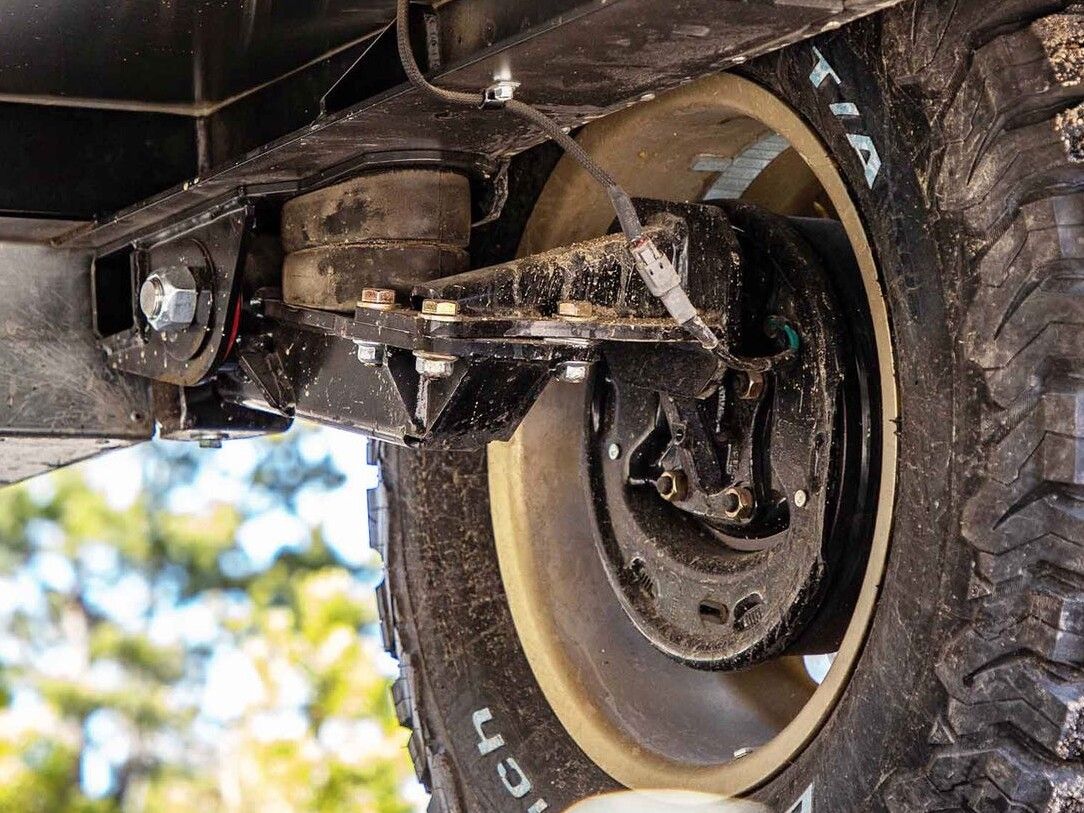


Active Off Road Bumpstops vs Competitors
Bumpstops: The Unsung Heroes of Off-Roading
When you’re off the beaten track, your factory bumpstops act as the “last line of defense” for your suspension. However, most factory bumpstops are made of hard rubber or plastic designed only to prevent metal-on-metal contact. When you hit a significant bump, they create a harsh “jolt” that can rattle your teeth—and your chassis.
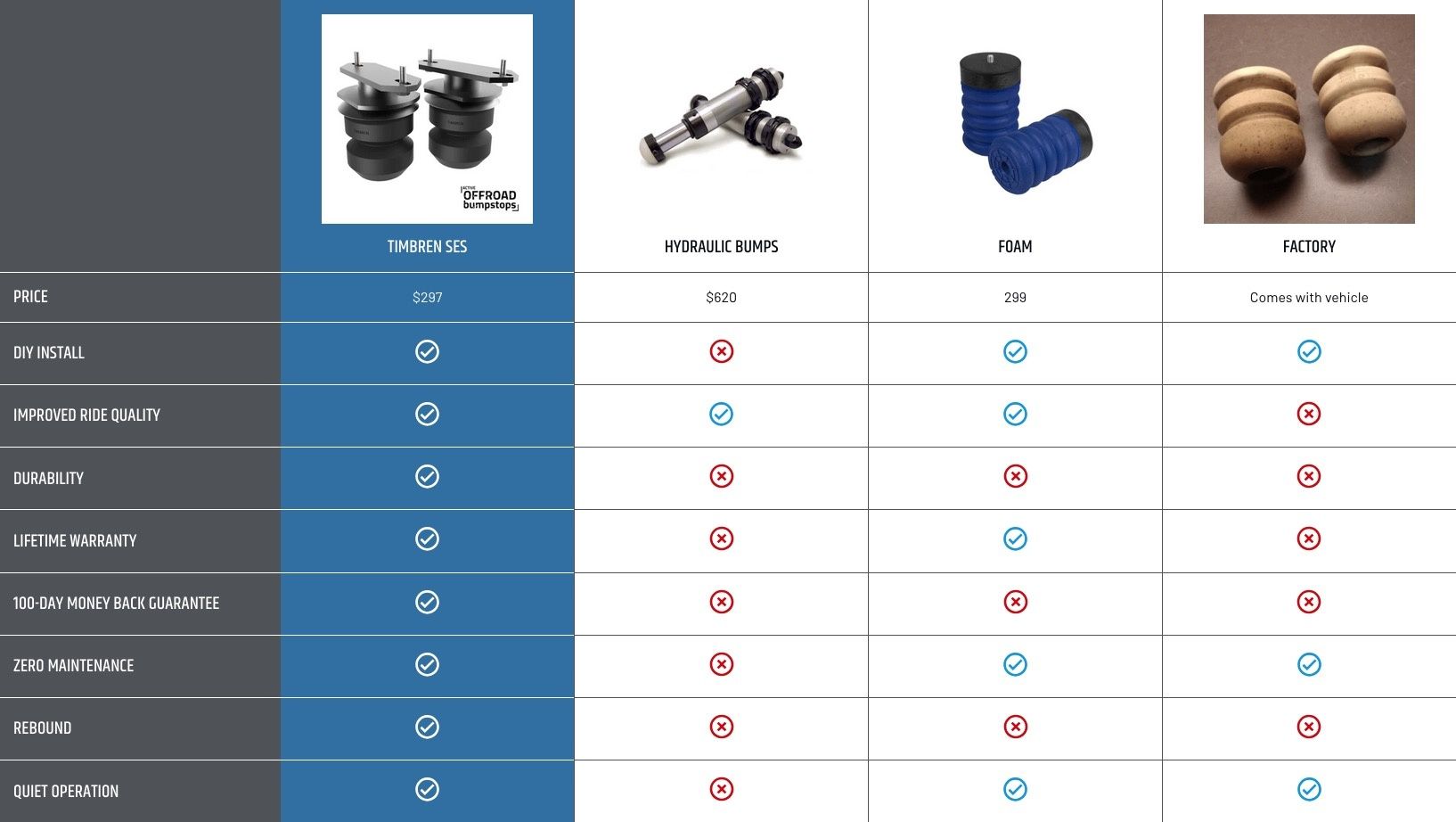
If you are serious about off-roading, you have three main choices for upgrades:
-
Nitrogen-Charged “Air” Shocks
- The Pro: These provide a highly adjustable, smooth “landing” for high-speed desert runs or technical climbs.
- The Con: They are expensive, require custom fabrication/welding for installation, and need regular maintenance and recharging.
2.Performance Polyurethane Stops
- The Pro: More progressive than factory rubber, helping to soak up some of the energy.
- The Con: They still have a limited “compression” range and can feel stiff when cold or under extreme articulation.
3. Timbren Active Off-Road Bumpstops
- The Pro: Made from Aeon® natural rubber, these are designed to be truly progressive. They soak up the impact energy smoothly, providing a much softer “bottom-out” than any other rubber or urethane option.
- The Advantage: Unlike air shocks, they are 100% maintenance-free. There are no seals to leak, no gas to recharge, and they bolt directly into your factory mounting holes in minutes.
The Result: You get a smoother ride over corrugations and much better control when things get rough, without the cost or complexity of race-style hardware.
Which One is Right for You?
- For the Daily Driver / Occasional Camper: Stick with the Timbren SES kits to handle the extra weight.
For the Dedicated Overlander / 4×4 Enthusiast: The Active Off-Road Bumpstops are the ultimate “fit and forget” upgrade for trail comfort.
Final Checklist for Your Suspension Project:
- Check for Wear: Examine your bushings and bearings for play after a long trip.
- Verify Alignment: Always check your wheel alignment after adjusting torsion bars or installing a lift.
Pressure Matters: Ensure your tire pressures are correct for the terrain you’re tackling.

Improve Your Pick Up Suspension
Perhaps you’ve recently picked up a new 1-tonne ute or a 4×4 SUV and, unladen, it rides like a dream. But as soon as you start kitting it out for the real world, you notice that dreaded “rear-end squat”.
Whether you are navigating the dunes in the Middle East, overlanding across the Outback, or hauling equipment through European city centers, a sagging suspension is more than just an eyesore—it affects your steering, braking, and safety.
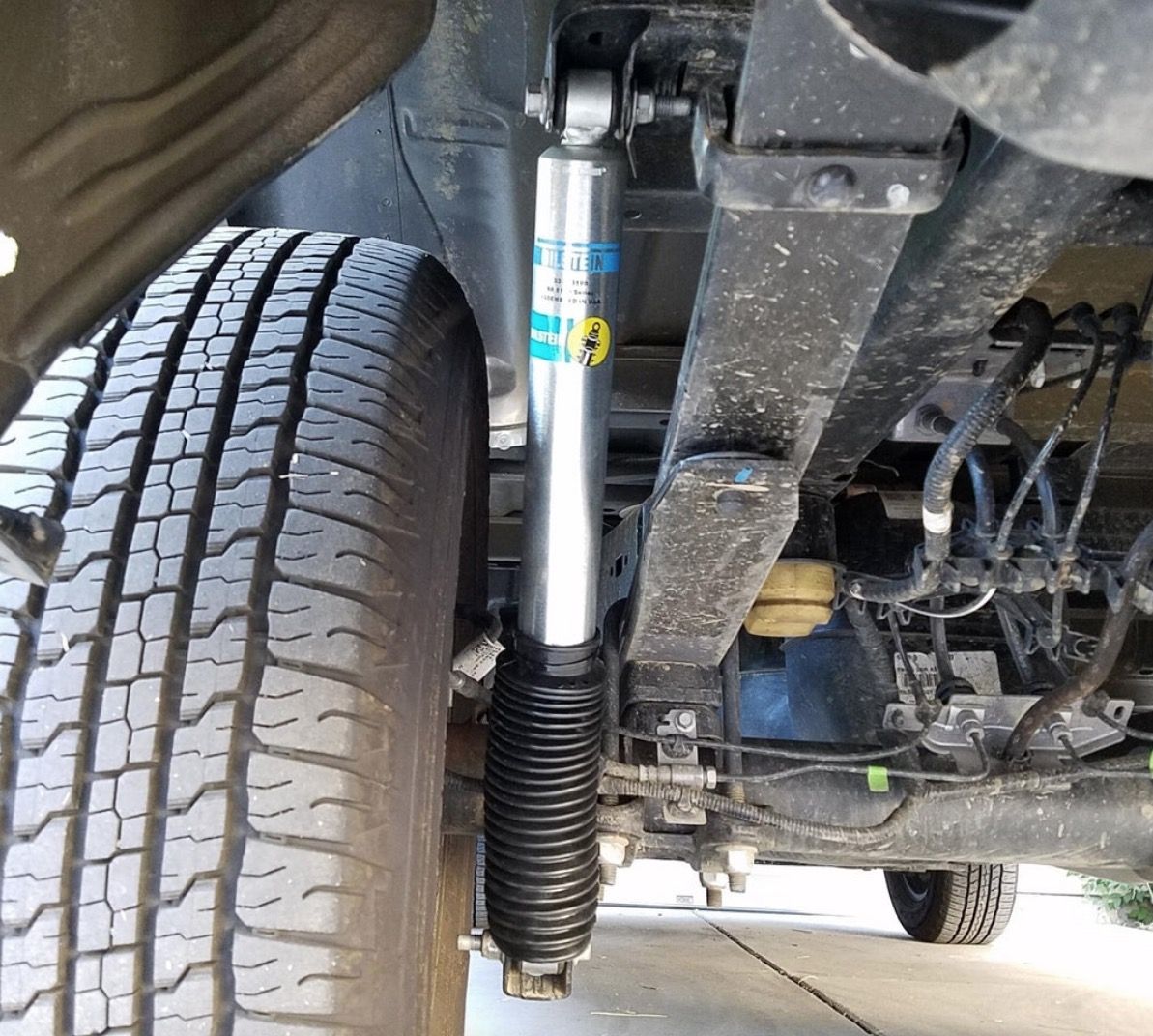
1. Upgrade the Shocks
Upgrading your shock absorbers is one of the fastest ways to “beef up” a suspension. While it helps control a saggy rear end and keeps your tires planted, be careful. Moving too far away from OEM (Original Equipment) can make the ride uncomfortably stiff for daily driving.
Pro Tip: If you aren’t installing a lift kit, avoid “long-travel” shocks meant for lifts; you’ll end up with less travel and likely ruin the valves.
Why is your 4×4 squatting?
There are plenty of reasons why your factory suspension might be struggling:
- Overlanding Gear: You’ve added a heavy canopy, rooftop tent, or expedition rack.
- Towing: You’re pulling a heavy off-road caravan, horsebox, or trailer.
- Work Loads: The tray is permanently filled with tools, a salt spreader, or commercial equipment.
- Front-End Weight: You’ve fitted a steel bullbar, winch, or secondary battery system.
The goal is to keep your vehicle level and stable while actually improving the ride quality. Here is how to do it properly.
2. Add Helper Springs (The Smart Way)
If you do heavy hauling, you need to reinforce your springs.
- For Leaf Springs: You can add an extra leaf or use bolt-on “spring helpers” to add tension.
- For Coil Springs: Inexpensive polyurethane braces can be slipped into the coils to reduce play.
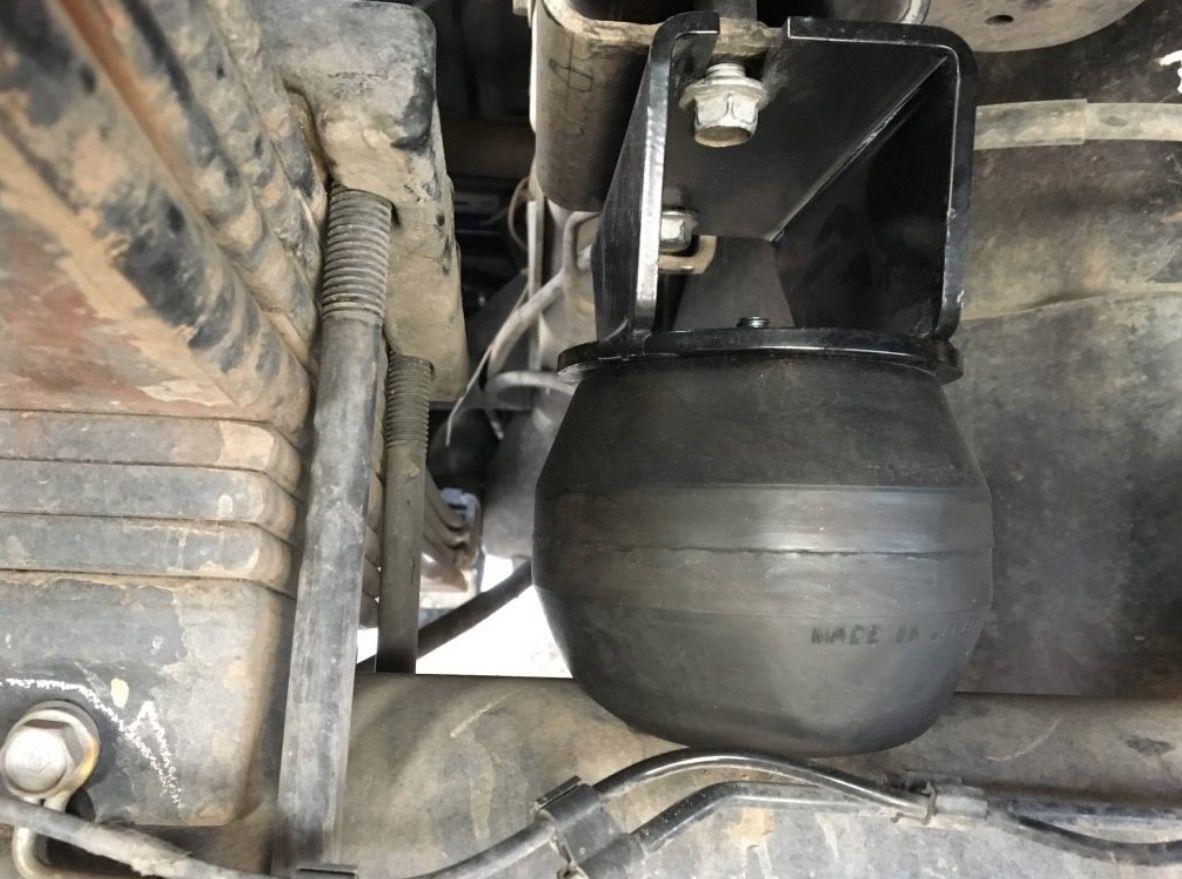
The Best Alternative: Consider hollow rubber springs. These replace your factory bump stops and sit between the frame and the axle. They only engage when you’re loaded, meaning you keep your “Cadillac” ride when the truck is empty.
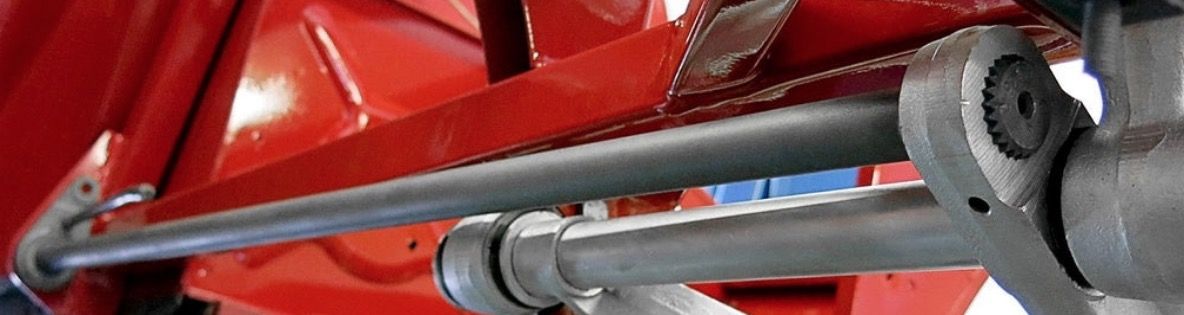
3. Adjust Your Torsion Bars
Many utes have adjustable torsion bars in the front. You can “crank” these to raise the front height to match a loaded rear, keeping the vehicle level. Just remember: this increases clearance, but it doesn’t actually increase your suspension’s travel range. Always get a re-alignment afterward.
4. Consider a Modest Lift Kit
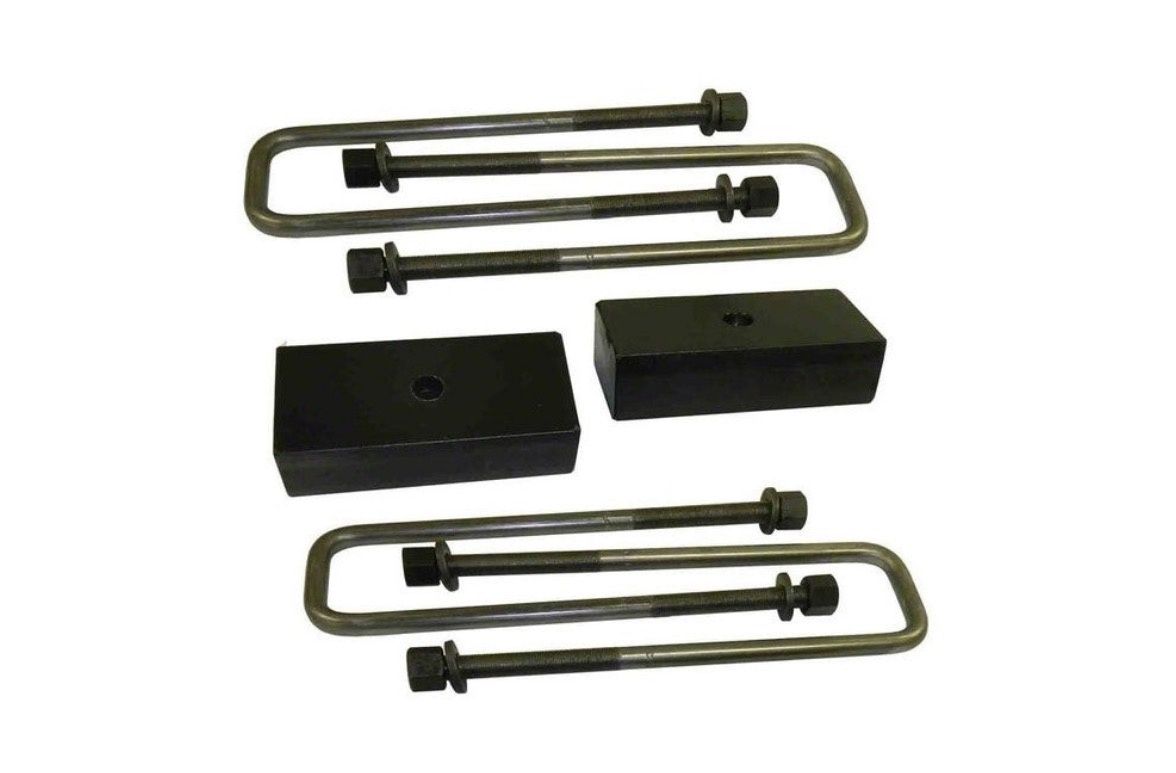
Lift kits can provide anywhere from 25mm to over 300mm of clearance. Don’t get carried away—a 1.5″ or 2″ (50mm) lift usually makes a dramatic difference without sacrificing too much stability or making it impossible to reach your gear.
5. Get a Suspension “Tune-Up”
Before buying new parts, have a specialist inspect your current setup. Factory tuning is usually for “average” demands. If you are constantly on rugged terrain or hauling heavy loads, you need a more dynamic response.
Your checklist should include:
- Checking bushings, bearings, and joints for wear.
- Inspecting shock absorbers for leaks.
- Verifying wheel alignment and tire pressures.
The Ride Solutions Verdict
If your suspension is failing to carry the weight or absorb the inconsistencies of the trail, it’s time for an upgrade. For a maintenance-free solution that provides load-leveling and stability, Timbren SES products are the gold standard.
Conquering the Dunes: Why Every Desert Rig Needs Timbren SES
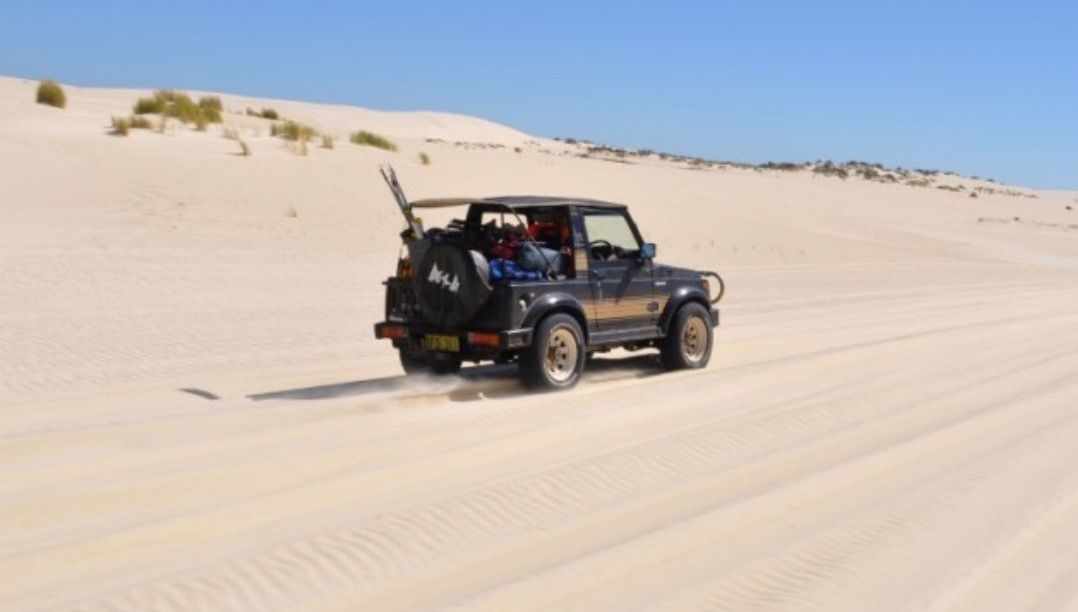
Whether you are crossing the Empty Quarter, exploring the Sahara, or tackling the coastal dunes of Asia, desert driving is the ultimate test of a 4×4. In the sand, your vehicle’s suspension has to work twice as hard. Between the heavy weight of expedition gear and the high-energy demands of dune bashing, factory springs often fall short.
At Ride Solutions, we know that a sagging rear end isn’t just an eyesore—in the dunes, it’s a recipe for getting stuck. That is why we recommend the Timbren Suspension Enhancement System (SES) as an essential upgrade for any desert-bound rig.
The Sand Challenge: Drag and Body Roll
When your vehicle is loaded with extra fuel, water, and recovery gear, it sits lower in the sand. This creates two major problems:
- The “Anchor” Effect: A sagging rear end reduces your departure angle. In soft sand, your rear bumper or tow bar can act like an anchor, digging into the face of a dune as you try to crest it, killing your momentum.
- The “Roll” Factor: Navigating the side of a dune (side-sloping) requires maximum stability. A top-heavy rig with a rooftop tent will suffer from excessive body roll, making the vehicle feel unstable and increasing the risk of a roll-over.
The Timbren SES Advantage in the Desert
Timbren SES kits replace your factory bump stops with Aeon® natural rubber springs. Here is why they are the “secret weapon” for desert experts:
1. Maintain Momentum with a Level Load
The progressive rate of the Aeon® springs ensures that even with a full expedition load, your 4×4 stays level. This keeps your chassis high out of the soft sand and preserves your departure angles, allowing you to float over dune crests rather than digging into them.
2. Superior Stability on Off-Camber Slopes
By providing extra support exactly when the vehicle begins to lean, Timbren SES significantly reduces body roll. This gives you the confidence to navigate off-camber sections of the dunes, keeping the vehicle composed and the weight distributed evenly across all four tyres for maximum traction.
3. High-Heat Reliability
Desert temperatures can be brutal, often exceeding 50°C. While air-based systems can suffer from pressure fluctuations or bag failure in extreme heat, Timbren’s natural rubber is impervious to the sun. It won’t leak, it won’t melt, and it requires zero maintenance.
4. Handling the “Whoops”
Desert tracks are often filled with “whoops”—repetitive, high-speed undulations. Timbren SES acts as a secondary shock absorber, soaking up these harsh impacts and preventing your suspension from bottoming out, which protects your chassis and your internal gear from damage.
Your Regional Partner for Desert Adventure
As the main distributor for EMEA and Asia, Ride Solutions stocks SES kits for the world’s most iconic desert vehicles:
- Toyota Land Cruiser (70, 100, 200, 300 series) & Hilux
- Nissan Patrol (Y61 & Y62)
- Land Rover Defender
- Ford Ranger & Raptor
Don’t let the sand swallow your momentum. Contact Ride Solutions today to level your load and dominate the dunes.